Creating system change while staying true to ourselves
At Te Taura Ora, we are committed to ensuring that the lived experience of our whānau and their voices shape the health system, strengthening Māori leadership and placing tino rangatiratanga and mana motuhake at the heart of every decision we make. How to achieve hauora sovereignty is based on how to “practise it, grow it, and normalise it.”
Recently, our team engaged with international Indigenous thought leaders at the Toitū Hauora Māori Health Leaders Symposium, hosted by Ngāti Tūwharetoa in Taupō with the support of Te Rau Ora. The Symposium kōrero was around a central question “How do we create system change and be true to ourselves?”
This collaboration brought together Māori leaders, indigenous innovators, alongside Chief Kirk Francis and Kitcki Carroll from self-governing unired South and Eastern tribal nations in the USA to explore how Indigenous-led governance, investment, and policy can strengthen health and wellbeing outcomes for communities. By connecting across borders, we were able to share thirty years of insights, learn from proven models off-shore, and consider how these approaches can strengthen whānau health outcomes here in Aotearoa.
The symposium reinforced that system change must be guided by tikanga, history, and identity. We reflected on our Te Arawa whakapapa, mana motuhake and tino rangatiratanga pre-1840 before Tāngata Tiriti arrived, and the ongoing need to honour whānau perspectives in all aspects of healthcare.
Engaging with Indigenous leaders from overseas demonstrated how self-determination in health can be successfully exercised, providing insights into governance models, policy advocacy, and sustainable investment that can be adapted to the Aotearoa context.
Being part of the Symposium aligns directly with our strategic priorities at Te Taura Ora. By connecting with iwi, hapū, providers, and international partners, we are building networks, sharing knowledge, and advocating for Māori-led solutions that strengthen whānau wellbeing. We are embedding Whānau Voice in decision-making, growing our capacity to influence health policy, and demonstrating the value of Māori leadership in driving system change.
At the heart of this approach, our Chair, Hingatu Thompson, shared at the Symposium how our mahi at te Taura Ora is guided by three key pou:
- Whānau Mana Motuhake – empowering whānau to actively lead and participate in their wellbeing.
- Hapū and Iwi Tino Rangatiratanga – strengthening self-determination across hapū and iwi structures.
- Māori Kotahitanga – fostering unity across iwi to collectively shape a health system that works for all whānau.
Te Toitū Hauora is now a platform to connect, learn, and translate Indigenous-led innovation into action. By actively engaging with international thought leaders and working in partnership with iwi and whānau, Te Taura Ora is ensuring that Māori leadership, values, and aspirations are at the centre of the health system now and for generations to come.

Twelve Projects Chosen in First Round of Whānau Voice Grants
Twelve whānau-led projects have been chosen in the first round of Whānau Voice Grants, giving hapori across our rohe the chance to shape hauora and wellbeing in ways that matter to them. Originally planned for ten grants from a $50,000 pool, the fund was boosted to support twelve projects, recognising the exceptional quality and creativity of the submissions received.
The grants were created to put whānau at the centre of decision-making, recognising that those living the experience know best what works locally. Proposals poured in demonstrating the strength, creativity, and commitment of whānau to transform hauora in their communities.
The winning Whānau Voice Grants highlight the strength and creativity of whānau-led solutions across the rohe, from digital storytelling and a ‘Virtual Whare Kōrero’ to filmed kōrero, podcasts, and photography. Plus kaupapa to improve health pathways, support rangatahi wellbeing, and uplift identity- and tikanga-led initiatives like Takatāpui hauora, moko kanohi revitalisation, and hapū-led burial planning. Together, they show that hauora thrives when whānau lead solutions grounded in culture, connection, and lived experience.
When the fund closed in November, twenty-five entries had been received that met the criteria based on kaupapa Māori design and/or whānau-led delivery. One of our Board members, Rawiri Bhana, says our approach challenges the usual way funding works.
“Communities that don’t fit the usual parameters, like remote or rural whānau, tāngata whaikaha, gang whānau, takatāpui, and young parents who often go unheard. Instead of asking whānau to conform, we are adapting the system to capture their expertise, creativity, and insight,” he says.
Entries were reviewed by a selection panel in December, with all submissions anonymised to ensure fairness. The high quality of proposals and strong alignment with Te Taura Ora o Waiariki values showed the depth of thought and creativity whānau bring to improving hauora.
The process revealed many grassroots initiatives need support alongside funding, with strong interest in projects grounded in tikanga Māori and mātauranga Māori. Whānau-led initiatives approached hauora priorities such as immunisations, oral health, and mental health in innovative, locally led ways.
As a result whānau were inspired to collect, interpret, and share their own stories, honouring that they are experts in their own health journeys. Social media helped spread the word, encouraged participation, and applicants described the process as mana-enhancing and empowering.
This approach is helping to build leadership and strengthen whanaungatanga at the grassroots. Participating whānau are developing skills in engagement, analysis, and storytelling, which can be applied to future planning and service design within the health system.
The twelve Whānau Voice Grant recipients will come together in February and, by May 2026, roll out their health and wellbeing initiatives, directly benefiting whānau across the Te Taura Ora o Waiariki region.
The twelve successful Whānau Voice Grant initiatives are:
| # | Organisation / Lead | Project |
|---|---|---|
| 1 | Korokai Holdings Limited | Tūhono - Strengthening health planning and commissioning. |
| 2 | Te Arawa Whānau Ora | Oro Tuawhenua Whānau Voice Shaping Cancer Prehabilitation for Māori |
| 3 | Donald Hollingsworth | Takatāpui Talk |
| 4 | Lynette Walmsley | Whakamana i te whenua, tūpāpaku, i te whānau. Reimagining burial practices. |
| 5 | Digital Narratives Academy | eSports sessions creating digital narratives. |
| 6 | Natalie Richards | Awhi Mai ki Rotorua - Stories of stroke survival. |
| 7 | Te Rūnanga Ngāti Kea Ngāti Tuara | Mokopapa – moko kanohi a pathway to cultural identity, hauora, and reconnection. |
| 8 | Kirini Limited | Immunisation whakaaro. |
| 9 | Christopher Ranui-Molloy | Ko Wai Mātou? Taonga Based Whānau Hauora Storytelling Pilot. |
| 10 | Waitangi Clarke | Ka Hao Te Rangatahi - marae-based wellbeing and cultural development. |
| 11 | Tipene James | Mental Health Waikite Senior A’s whānau voices. |
| 12 | Bianca Taute | Silencing the shitty committee – Podcast series on rangatahi mental health awareness. |
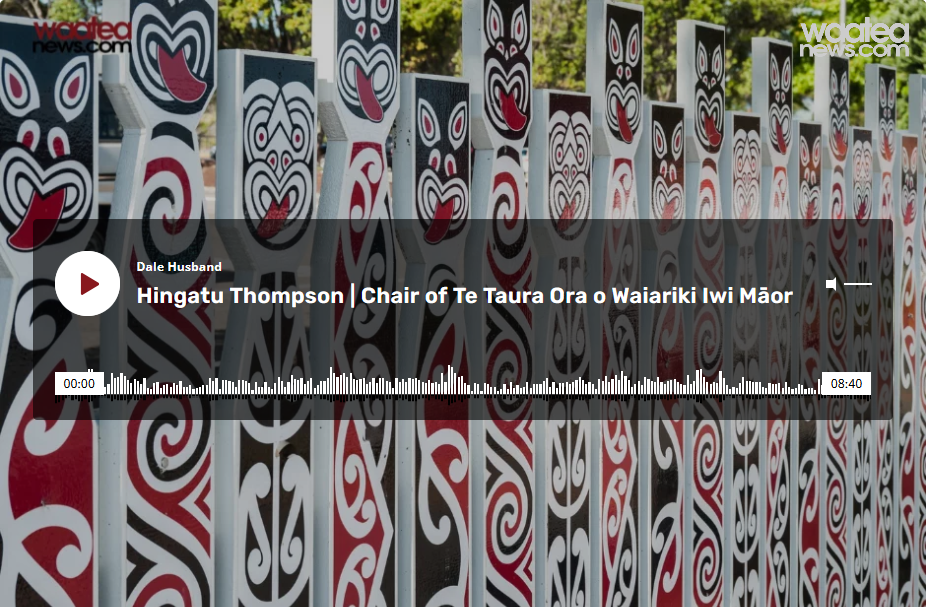
Hingatu Thompson | Māori Health Advocate Hingatu Thompson Sounds Alarm Over Pae Ora Changes
Hingatu Thompson: Pae Ora Bill Changes Called ‘An Attack on Māori Health Futures.
Hingatu Thompson, a member of the Te Taura Ora o Waiariki Iwi-Māori Partnership Board, has publicly warned that the government’s proposed reforms under the Healthy Futures (Pae Ora) Amendment Bill represent “an attack on Māori health futures”. The concerns have added to widespread industry and community opposition to the Bill.
The Amendment Bill seeks to restructure how health services are delivered nationwide. Among the most controversial changes are:
-
The removal of the statutory obligations for health organisations to pursue equity for Māori outcomes.
-
A diminished role for Iwi–Māori Partnership Boards (IMPBs). Under the reforms, IMPBs would be relegated to advisory status – stripping them of many existing powers around commissioning services, planning, and local Māori governance in health care.
-
The elimination of certain governance and Treaty-based obligations. The Bill removes the requirement for the health board to include expertise in te Tiriti o Waitangi, equity and kaupapa Māori when appointing its members.
-
Increased centralisation of decision-making, shifting power from local iwi-community input to national-level administration through the main health service provider.
Taken together, critics say these changes undermine decades of progress towards equitable Māori health outcomes and weaken the ability of Māori communities to shape health services for themselves.
Thompson has been vocal about four major flaws in the Bill, urging the government to reconsider before proceeding.
-
Hingatu argues the reforms reduce Māori agency and decision-making power in health – even though Māori continue to experience significant health inequities compared with non-Māori.
-
He warns that downgrading IMPBs to advisory status removes the guarantee of local input, making health planning less responsive to community needs and less culturally safe.
-
Thompson says the Bill’s shift toward infrastructure and broad national governance priorities risks sidelining kaupapa Māori health services and the holistic, whānau-centred approach that Māori communities rely on.
-
He expresses deep concern that removing statutory commitments to Māori health equity effectively erases obligations under the Te Tiriti o Waitangi in health care – a fundamental principle since earlier health reforms.
In his view, the Bill doesn’t just restructure the health system – it represents a retreat from Treaty-based accountability and a threat to Māori wellbeing.
Thompson is not alone. The Bill has drawn criticism from a wide range of health professionals, Māori organisations, primary-health providers, and disability advocacy groups. Many submitters to the Health Committee described the Bill as weakening equity commitments, reducing accountability, and threatening community-based care models that target Māori needs.
One medical community submission warned that removing obligations to improve Māori health outcomes risks worsening inequities, not only for Māori but for many other vulnerable populations.
Meanwhile, Māori health advocates across the motu say the changes reverse years of progress and could lead to poorer health outcomes, less cultural safety, and decreased trust in public health institutions.
The reforms come only a little over a year after the disestablishment of the former dedicated Māori Health Authority, Te Aka Whai Ora – itself one of the pillars of Māori-led health governance. That 2024 change was controversial and challenged under a priority inquiry by the Waitangi Tribunal, which found the Crown had breached Treaty obligations in how it removed Te Aka Whai Ora without proper consultation or Māori agreement.
Many see the current Amendment Bill as the next step in a legislative trend that sidelines Māori-specific health governance and erodes structural protections for Māori health equity.
As of December 2025, the Healthy Futures (Pae Ora) Amendment Bill has passed its first reading and is before the Health Committee for submissions. But according to media reports, the Committee’s final report – submitted recently – returns the Bill to Parliament without changes, despite widespread opposition.
For Thompson and many others, that outcome signals that the government may proceed regardless of how many communities, medical experts and Māori leaders speak out – making their advocacy ahead of the next legislative stage all the more critical.
They are urging Māori, whānau, and community supporters to submit feedback to the Health Committee (or resubmit if already done), to publicly vocalise concerns, and to call on MPs to uphold Treaty-based health equity and meaningful Māori participation in the health system.
Original Article Source: https://waateanews.com/2025/12/05/hingatu-thompson-chair-of-te-taura-ora-o-waiariki-iwi-maori-partnership-board/