Waiariki Health Realities in Māori Hands Thanks to Dedicated Data Dashboard
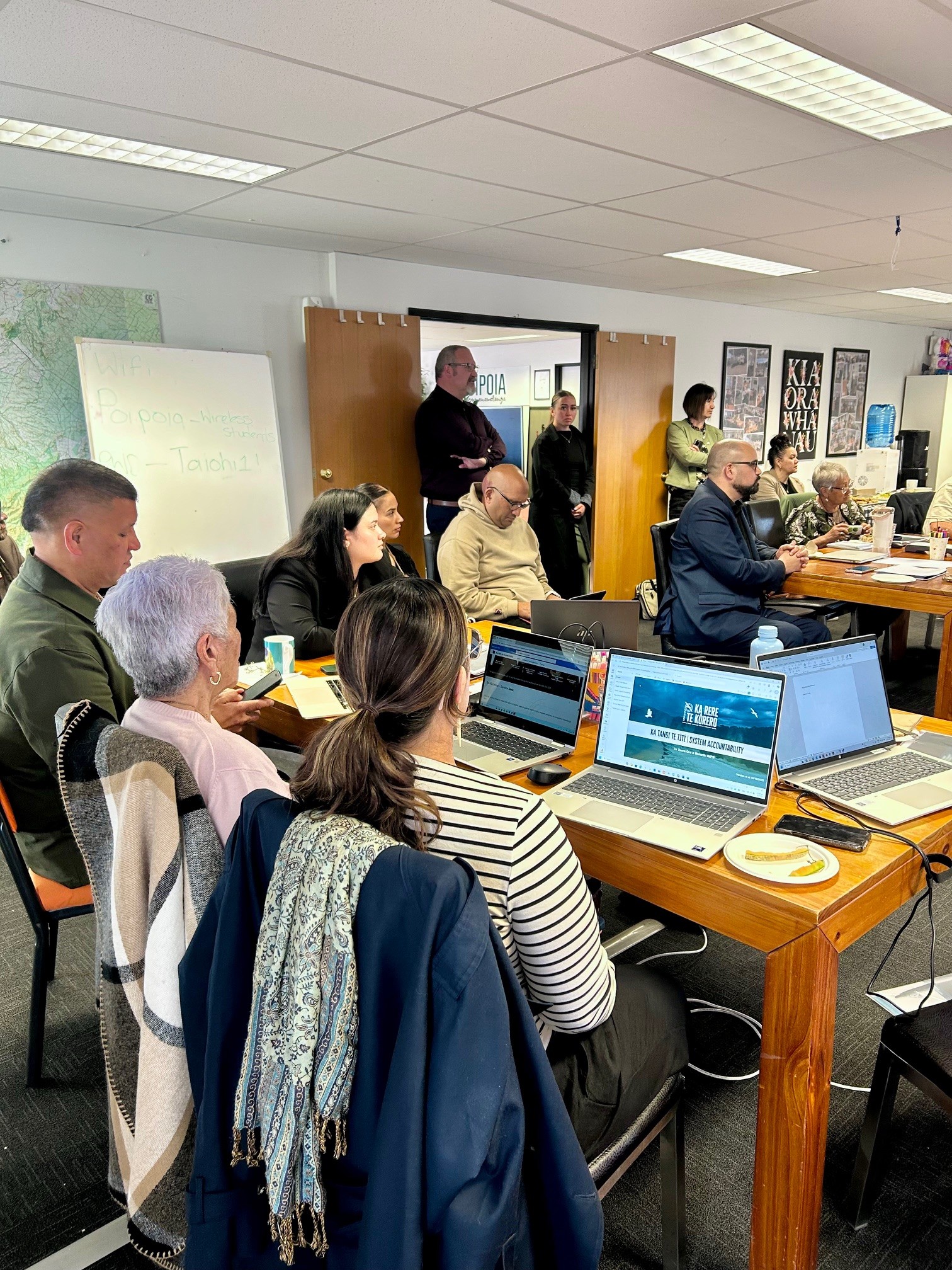
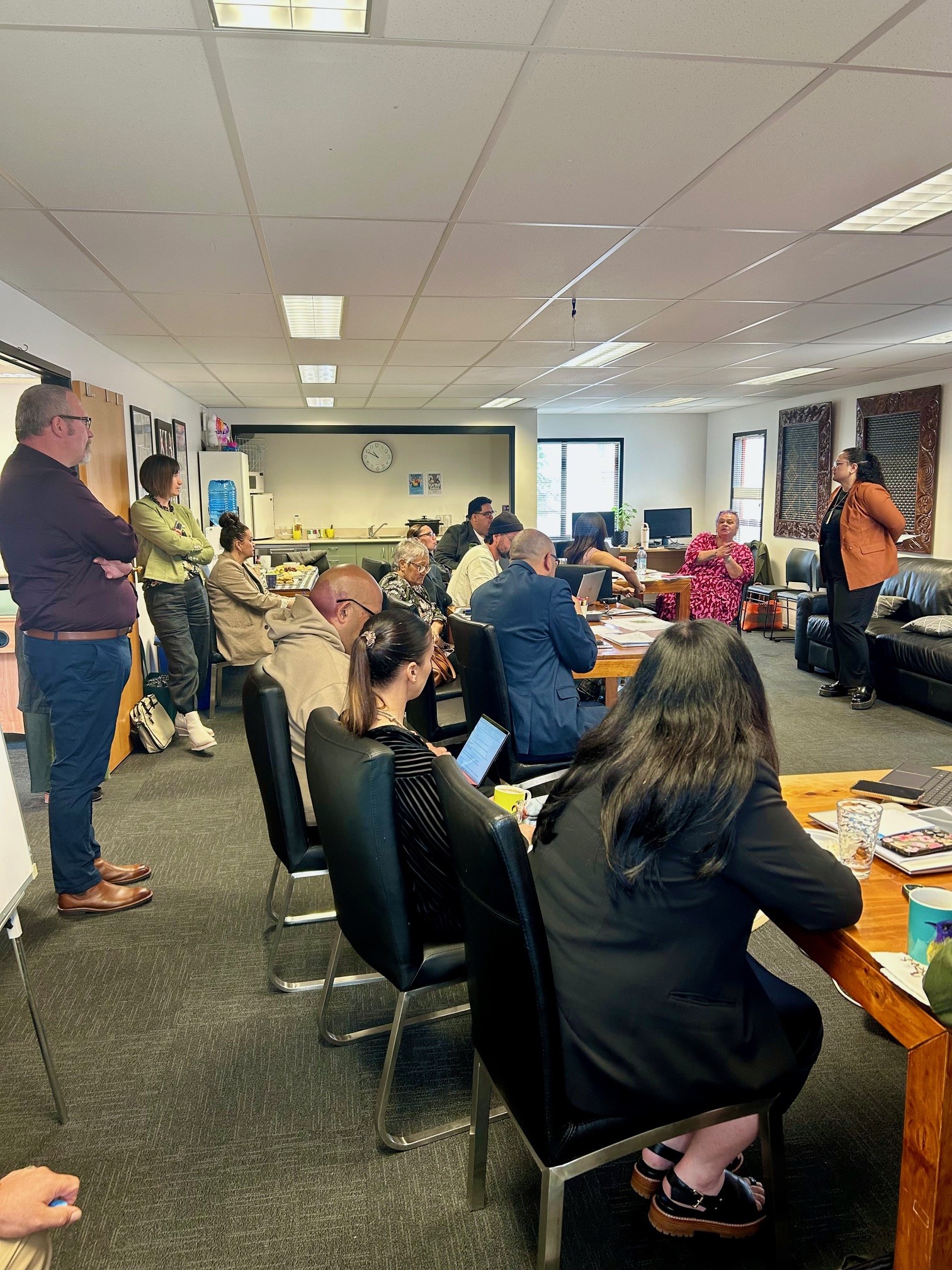
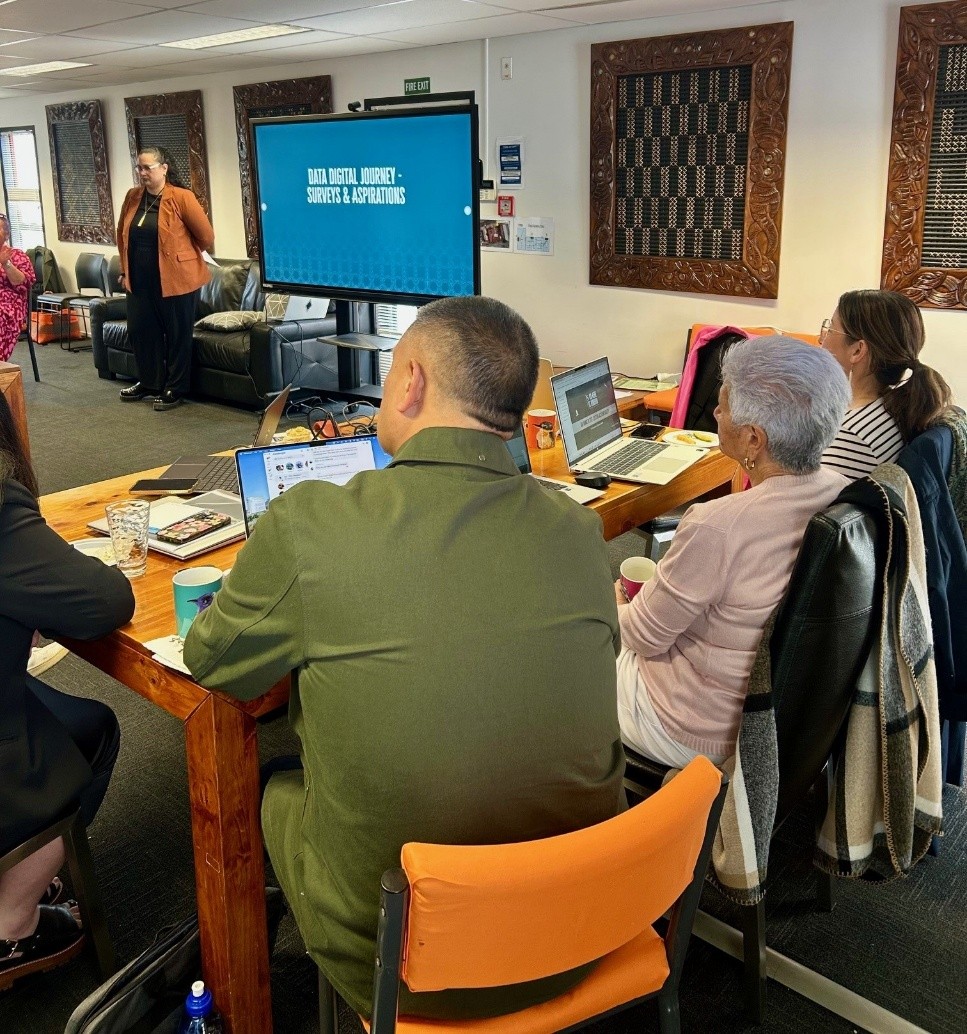
Te Taura Ora o Waiariki, the Iwi Māori Partnership Board (IMPB) has taken a major step toward transforming how Māori health data is accessed, understood, and used for decision-making, completing the first stage of training for a new Māori data platform that will empower iwi to see their own health trends clearly for the first time.
The training, held in Taupō alongside governance members and three neighbouring Iwi Māori Partnership Boards, marks the beginning of a significant shift toward Māori data sovereignty, ensuring information about our people is held, interpreted, and used by us, for us.
“This marks a pivotal moment for Māori leadership in health. This data platform allows us to see our people clearly. We can now identify exactly where needs exist, where gaps in the system are impacting whānau, and where opportunities lie to invest in solutions that will create real change,” said Hingatu Thompson, Chair of Te Taura Ora o Waiariki.
Until now, data relating to the Waiariki region was grouped within the wider Lakes District, which meant the true realities of our whānau were hidden within larger population sets. Now for the first time, Te Taura Ora o Waiariki will be able to access a dedicated dashboard populated with data specific to our rohe.
The initial dashboard draws on information currently provided by Te Whatu Ora on the government’s 5+5+5 health targets:
- Faster cancer treatment
- Improved immunisation
- Shorter stays in emergency departments
- Shorter wait times for first specialist assessment
- Shorter wait times for elective treatment
While this first iteration is modest, it represents a breakthrough in visibility and will provide a foundation on which a richer, more comprehensive dataset will be built over time.
Participants in the training explored data through a te ao Māori worldview. Rather than viewing data as numbers alone, kaimahi reflected on data as a living narrative that carries the voice, mana and aspirations of whānau, hapū and iwi. The training is designed to build capability and confidence so that data insights can be used to inform strategic planning, influence policy, and strengthen advocacy on behalf of Māori communities.
Te Taura Ora o Waiariki has also been gathering whānau voice independently through kōrero, surveys and hui. Although this qualitative data is not yet integrated into the dashboard, it remains central to interpreting the numbers and will be used alongside the platform to ensure decisions reflect lived reality, not just statistics.
The platform build and training are being led by Te Tihi o Ruahine, a respected whānau ora collective with deep expertise in Māori data systems and technical development. Seven more training modules will be delivered between now and June 2026, with one of these wānanga set to be hosted in Te Arawa in February 2026. As the platform matures, new data sources will be incorporated to build a more complete picture of community wellbeing.
“This kaupapa is not just about technology,” Thompson said. “It is about restoring mana motuhake, defining success on our own terms, and using evidence grounded in our worldview to uplift the wellbeing of our whānau.”
The training follows the key appointment of Urukahinga Rei (Ngāti Whakaue, Tūhourangi) as Kaitātari, a role that identifies, describes, and maps key datasets relevant to whānau hauora.
In the coming years, Te Taura Ora o Waiariki will share insights and stories emerging from the data platform with iwi partners, Māori providers and communities to support collective action toward improved health outcomes.
Media Liaison: Sarah Sparks Email: Sarah.sparks@sparksconsulting.co.nz Mobile: 021318813

Te Taura Ora IMPB Warns Pae Ora Bill Worsens Inequities Urges Abandonment
Te Taura Ora o Waiariki, the Iwi Māori Partnership Board (IMPB), will make a formal submission before Parliament’s Select Committee on Tuesday 2 September at 9:50am on the Pae Ora Bill. Deputy Chairperson Jenny Kaka-Scott will present to Subcommittee A, chaired by Sam Uffindell, with members Dr Carlos Cheung, Cameron Luxton, Hūhana Lyndon, and Debbie Ngarewa-Packer.
“This Bill undermines the principles of Te Tiriti o Waitangi by stripping away statutory protections that give Māori genuine influence in health service design and delivery decisions impacting our people,” Jenny Kaka-Scott said.
Te Taura Ora o Waiariki opposes the Healthy Futures (Pae Ora) Amendment Bill because it reduces Māori from being meaningful decision-makers to advisors to the Minister’s advisors, which represents a constitutional regression.
“The Pae Ora Act 2022 is one of the few modern health laws that truly embeds Te Tiriti into governance, service design, and monitoring, and the proposed amendments would weaken those protections nationwide.”
She said that IMPBs must be strengthened to maintain statutory authority to monitor the health sector independently, partner in local service design and delivery, and hold the power to appoint a majority of Hauora Māori Advisory Committee members who are accountable to iwi.
“This ensures real influence over our local health services, rather than tokenistic consultation. Weakening IMPBs also undermines Crown credibility, Tiriti compliance, and accountability in Māori health,” she said.
Kaka-Scott said the Bill also risks dismantling mechanisms that are already delivering positive outcomes for Māori. Te Taura is one of 15 IMPBs operating across Aotearoa, providing a vehicle for rangatiratanga in health. Removing their statutory functions would undermine these proven approaches and weaken local voices in health planning.
“In our Te Arawa rohe, Te Taura Ora o Waiariki has successfully partnered with Rotorua Hospital, local PHOs, Hauora Māori providers, Bay of Plenty Public Health, and community leaders to embed local priorities into Regional Health and Wellbeing Plans. Our partnerships demonstrate how IMPBs improve outcomes on the ground through genuine Te Tiriti-based engagement and co-design.”
These local successes highlight what is at stake, as the Bill’s proposed changes risk undermining the very mechanisms that are improving Māori health outcomes and addressing persistent inequities in Te Arawa.
“Evidence shows that Māori continue to experience shorter life expectancy and higher rates of preventable hospitalisations. By removing mandatory engagement, cultural responsiveness, and independent monitoring, the Bill would reduce culturally safe care, allow inequities to go unreported, and impose one-size-fits-all universalism solutions that fail to meet local Māori needs,” Kaka-Scott said.
Te Taura Ora o Waiariki is calling on Parliament to abandon the Bill or at worst, redraft it to retain and strengthen statutory Te Tiriti protections, IMPB powers, and co-design mechanisms. Until such changes are made, the Pae Ora Act 2022 remains in force, and Te Whatu Ora Health NZ must fully comply with its current statutory requirements.
Media Liaison: Sarah Sparks Email: Sarah.sparks@sparksconsulting.co.nz Mobile: 021318813

Waiariki Iwi Māori Partnership Board calls for action on low cancer screening rates
Just under 60% of Māori women in Waiariki are up to date on breast and cervical cancer screenings. Photo / Getty Images
Waiariki whānau will be “dying needlessly” if breast and cervical cancer screening rates do not improve, the local Iwi Māori Partnership Board (IMPB) says.
Te Taura Ora o Waiariki is concerned about the “very low” screening rates, with data showing less than 60% of Māori wāhine in the Te Whatu Ora Lakes region were up to date last year.
The IMPB has issued the first of its quarterly monitoring reports on the performance of Te Whatu Ora Health New Zealand.
Under the Pae Ora Act 2022, IMPBs are tasked with monitoring the performance of the health sector within their rohe.
The report showed 58% of Māori wāhine were up to date with cervical screens and 55.9% with breast screens for the quarter ending in September 2024.
For the following quarter, the figures increased to 59.9% and 56.8% respectively.
Te Taura Ora o Waiariki chairman Hingatu Thompson called on more investment in hauora providers to raise awareness and “help people get there”.
“Providers proved they can reach our whānau during Covid with the high rates of testing and vaccination. Given the resource, they can make a massive impact on cancer screening rates.”
Thompson said the board’s focus was improving cancer screening and child immunisation rates, “as those two services save lives”.
“We will do whatever it takes to encourage Health NZ to use our local experienced providers to help close those gaps.
“That will make a huge difference to our community.”
Te Taura Ora o Waiariki member Rutu Maxwell-Swinton said the “real worry” of the report was “very low” cancer screening rates.

Waiariki IMPB members (from left) Rutu Maxwell-Swinton, John Porima, Deputy Chair Jenny Kaka-Scott, Rāwiri Bhana, Te Rau Aroha Morgan, Chairman Hingatu Thompson, and Lauren James.
“Unless we can get potential cancers detected earlier, we are going to have whānau dying needlessly from undetected cancers,” she said.
Maxwell-Swinton also highlighted low child immunisation rates in the Lakes region, with only 55.9% of eligible Māori children aged 24 months having received their childhood immunisations at the end of December.
This compared with 76.1% of European children.
“This is another area where Māori providers, hapū and iwi can have an impact if given the resourcing to bridge the equity gaps, as clearly the mainstream system isn’t working well.”
Te Arawa Whānau Ora Kaiaukaha-ā-Matariki Oro Tuawhenua co-ordinator Yvonne Rogers said the screening data was “disappointing because we know screening saves lives”.
Her work involved increasing participation in screening through promotion, prevention, and ensuring accessibility to screening programmes and services if people were diagnosed, she said.
“We know that a lot of our wāhine and tāne present too late.”
Rogers said distrust within the health system and “fear of knowing” were among reasons for lower screening rates for wāhine Māori.
“For me and for our organisation, it’s about demystifying those myths … people don’t have to die from diseases like that if they’re caught early enough.”
She encouraged wāhine to screen early and to seek medical support if they noticed changes within their bodies.
Health NZ director of prevention, Alana Ewe-Snow, said its new national breast-screening system, Te Puna, would increase coverage for all population groups over time.
The rollout of Te Puna was completed last month and women were now automatically identified when they became eligible and invited to book a mammogram, changing “from an opt-in to an opt-out model”.
Ewe-Snow said a review of BreastScreen Aotearoa made 26 recommendations, focused on improving access, support and experiences for wāhine Māori and Pacific women, and disabled women.
Initiatives to improve screening coverage were under way in partnership with Hauora Māori partners, communities and whānau, she said.
This included the National Telehealth Service Whakarongorau Aotearoa trialling of their whakawhanaungatanga (relationship building) approach, supporting a breast screening provider.
This involved follow-up calls to wāhine Māori and Pacific women who had not replied to screening invitations or who had missed a mammogram appointment.
BreastScreen Aotearoa was delivering a national campaign to promote the importance of getting two-yearly mammograms. It aimed to increase breast screening rates for wāhine Māori and targeting regions where screening was lowest.
Ewe-Snow said the national cervical screening programme continued to prioritise improvement in screening levels for Māori and other priority groups by expanding the human papillomavirus (HPV) primary screening workforce to include non-clinical staff.
She said this would support screening capacity and enable more community health providers to offer screening. This helped to reduce access barriers for those who may not be enrolled in general practices.
It also continued to fund screening support services to support wāhine Māori who experienced accessibility barriers. The services were focused on areas with lower cervical screening coverage.
Ewe-Snow said a self-test HPV option was implemented in September 2023. Evidence suggested this was a “more culturally acceptable test” for wāhine Māori, enabling them to better participate in the programme.
Article by Megan Wilson (Rotorua Daily Post)
Original Article Source: https://www.nzherald.co.nz/rotorua-daily-post/news/waiariki-iwi-maori-partnership-board-calls-for-action-on-low-cancer-screening-rates/EKAKBG3YQFDKXN52ZEDMNDRYNE/